
Have you ever wondered whether a single session can feel like a true mini-journey instead of a rushed checkbox?
You open this piece seeking more than a quick treatment; you want a calm, personal, luxury moment that fits your travel rhythm. Deciding between a traditional hammam ritual, a modern spa session, or a hybrid starts with one clear intention: how your body feels now.
Quick facts help you compare options: entry prices begin near $41.26, sessions often run 50–125 minutes, and many venues include lockers, lounges, and Turkish tea. These small details show whether the services truly match the price.
This introduction aims to make your choice simple and confident. Expect fewer crowds, quieter rooms, and higher-touch service so your time becomes gentle, clear, and restorative.
Key Takeaways
- You’ll learn what boutique-level service means in a busy city.
- Budget realistically with a $41.26 starting anchor and common duration ranges.
- Spot value by checking included amenities like storage and refreshments.
- Match session length to your energy and travel plans for true relaxation.
- Find trusted local options and learn how to choose a high-touch experience.
- Explore curated services and read reviews before booking to avoid rushed visits.
For tailored suggestions and trusted booking details, check the best butik services.
Why Istanbul Is the Perfect City for a Boutique Massage Experience Right Now
Here, age-old steam rituals sit side by side with design-led calm and tailored wellness. The result is an experience that feels both rooted and modern.
Traditional Turkish wellness appears in refined settings. Historic hammams inform treatments, while independent centers and hotel spas add aromatherapy and deep tissue options.
What boutique-style service looks like
Smaller rooms, fewer guests, and staff that adapt the treatment to your needs make a clear difference. You get curated services rather than a long, confusing menu.
How heritage and modern spa offerings blend
Expect foam rituals and kese scrubs alongside oil therapies and targeted massage techniques. Venues commonly include lounges and refreshments to extend the calm.
Trends to watch in 2026
Heritage rituals remain central, but luxury options rise near waterfront hotels and major districts. More premium services and private rooms will be available.
| Feature | Heritage Baths | Modern Spa Centers | What to Expect |
|---|---|---|---|
| Atmosphere | Historic, steam-filled | Design-led, quiet | Cultural depth + comfort |
| Common Services | Scrub, foam | Aromatherapy, deep tissue | Choice of treatments |
| Extras | Traditional tea | Lounge, refreshments | Recovery-focused |
To explore curated options and trusted listings, see this best butik experiences.
Understanding Traditional Turkish Hammam Culture Before You Book
Before you reserve a slot, it helps to know how a hammam shaped local care rituals over centuries. The hammam is more than a bath; it influenced how the city sees cleansing, recovery, and public care.
How historic ritual shaped modern practice
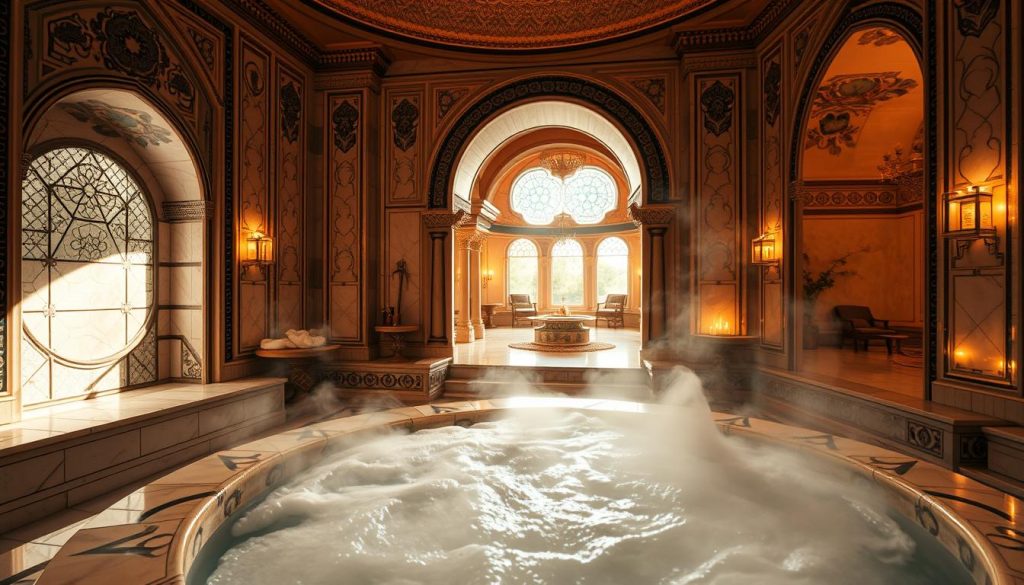
Over 237+ historic hammams still mark the city, and icons like Hürrem Sultan Hammam (built 1556 by Mimar Sinan) show how form and function merged.
The classic flow—warm steam, kese exfoliation, scrubs, a foam massage, then a pause for relaxation—created techniques later adapted by modern spa centers.
What to expect during the ritual
- Warm-up in steam to loosen muscles and pores.
- Exfoliation with a kese glove followed by cleansing scrubs.
- A foam massage that blends gentle pressure with lathered comfort.
- Quiet time afterward to rest and hydrate.
Traditional baths versus modern spa choices
If you want ceremony and atmosphere, choose a hammam. If you need targeted work—reflexology, deep tissue, or aromatherapy oil treatments—a modern spa fits better.
“The hammam teaches a rhythm of care: heat, touch, and calm.”
| Aspect | Hammam | Modern Spa |
|---|---|---|
| Primary focus | Ritual, cleansing | Targeted treatments |
| Common te |