
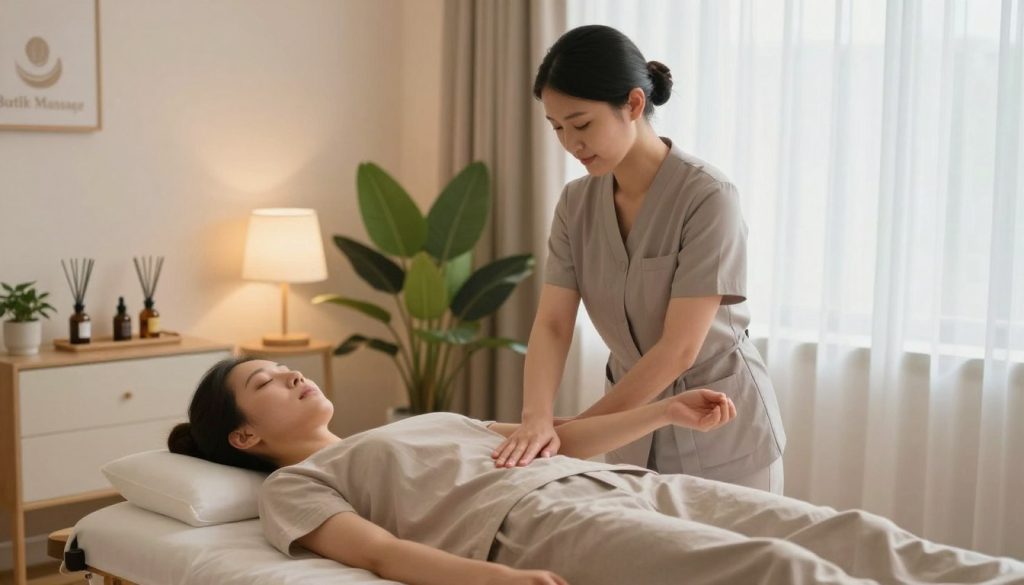
Your body sometimes retains fluid or feels swollen after surgery, injury, or a long flight. The answer often lies in your lymphatic system. This hidden network works tirelessly to keep you healthy.
Your lymphatic system functions as your body’s natural defense and waste removal mechanism. It collects excess fluid from your tissues. It also filters out toxins and harmful substances.
This system can become sluggish due to medical conditions, surgery, or lifestyle factors. Fluid accumulation can occur, leading to discomfort and swelling.
Lymphatic drainage massage represents a specialized therapeutic approach. It supports your body’s natural cleansing process. Unlike traditional deep tissue techniques, this therapy employs gentle, rhythmic strokes.
These strokes follow the natural pathways of your lymph vessels. Trained practitioners can perform it manually. Device-assisted methods are also available in clinical settings.
This treatment stands out as a valuable tool for managing edema. It supports post-surgical recovery. It also provides complementary care for various chronic health conditions.
Many people experience benefits from this therapy. Your results may vary based on your individual health status. The specific condition being addressed also affects outcomes.
Key Takeaways
- Your lymphatic system serves as your body’s defense and waste removal network, collecting tissue fluid and filtering harmful substances
- Lymph drainage therapy uses gentle, specialized techniques that differ significantly from traditional deep tissue approaches
- This treatment is particularly effective for managing swelling, supporting post-operative recovery, and addressing lymphedema
- Both manual techniques by trained therapists and device-assisted methods are available depending on your specific needs
- Lymphatic drainage massage benefits extend beyond cosmetics to legitimate therapeutic applications in medical and wellness contexts
- Individual results depend on your health condition, adherence to professional recommendations, and the underlying issue being treated
What is Lymph Drainage Massage?
Lymph drainage massage uses your body’s natural healing through precise, gentle movements. This specialized treatment focuses on your lymphatic system. It’s a critical part of your immune defense and waste removal processes.
Unlike traditional massage that targets muscles and deep tissues, this therapy works differently. It focuses on the delicate network of lymphatic vessels just beneath your skin’s surface.
Your lymphatic system operates quietly throughout your body, performing essential functions that keep you healthy. It collects excess fluid from your tissues and transports immune cells to fight infections. It also carries away metabolic waste products.
The Core Elements and Foundation
The manual lymphatic drainage technique employs remarkably light pressure. It feels distinctly different from what you might expect from massage therapy. Practitioners use a touch that weighs no more than a nickel resting on your skin.
This feather-light approach makes sense. Lymphatic vessels sit very close to your skin’s surface. They respond best to gentle stimulation rather than deep pressure.
The technique relies on specific rhythmic patterns that follow the natural direction of lymph flow. Therapists perform circular, pumping motions that create a wave-like effect across your skin. These movements must follow precise sequences, always working toward major lymph node clusters.
A trained physiotherapist or specialized healthcare professional administers these treatments. They complete extensive certification programs first. The practitioner must understand anatomy, physiology, and the intricate pathways of your lymphatic system.
This knowledge ensures that gentle lymphatic massage strokes follow correct patterns to achieve therapeutic benefits.
| Characteristic | Lymph Drainage Massage | Traditional Massage |
|---|---|---|
| Pressure Applied | Extremely light (5-15 mmHg) | Moderate to deep (20-40+ mmHg) |
| Primary Target | Lymphatic vessels and nodes | Muscles and connective tissue |
| Movement Type | Rhythmic, circular, directional | Kneading, pressing, friction |
| Depth of Work | Superficial skin layer | Deep tissue layers |
Evolution Through Medical Discovery
The modern understanding of lymphatic therapy emerged through decades of clinical observation and scientific research. Early medical practitioners recognized that the lymphatic system played a crucial role in health. However, systematic treatment approaches took time to develop.
European researchers pioneered much of the foundational work during the mid-20th century. They developed protocols that remain relevant today.
Dr. Emil Vodder and his wife Estrid introduced a systematic approach to lymphatic drainage in the 1930s. They worked on the French Riviera at the time. They observed that many patients with chronic colds and sinusitis had swollen lymph nodes.
Their gentle manipulations of these areas led to remarkable improvements in patient symptoms. This sparked interest in lymphatic therapy as a distinct medical intervention.
Medical understanding continued to evolve as researchers mapped the complete lymphatic network. They identified how disruptions in lymph flow contributed to various health conditions. This knowledge transformed lymph drainage from an experimental technique into an evidence-based therapeutic modality.
Today, healthcare systems worldwide recognize its value. It’s particularly useful for conditions involving fluid retention, immune dysfunction, and post-surgical recovery.
The lymphatic system is one of the most overlooked yet vital systems in the human body, and learning to support it therapeutically opens new possibilities for healing.
Physiological Mechanisms and Treatment Flow
Your lymphatic system lacks a central pump like your heart. This means lymph fluid moves through alternative mechanisms. Muscle contractions during daily movement, respiratory motion from breathing, and inherent contractions of lymphatic vessel walls all contribute.
The manual lymphatic drainage technique enhances these natural processes by providing external mechanical stimulation.
Practitioners perform gentle lymphatic massage strokes using rhythmic pressure. This creates a pumping effect within your lymphatic vessels. The stimulation mimics and amplifies the natural pulsation of these vessels.
It accelerates the movement of lymph fluid toward lymph nodes. The increased flow rate h