
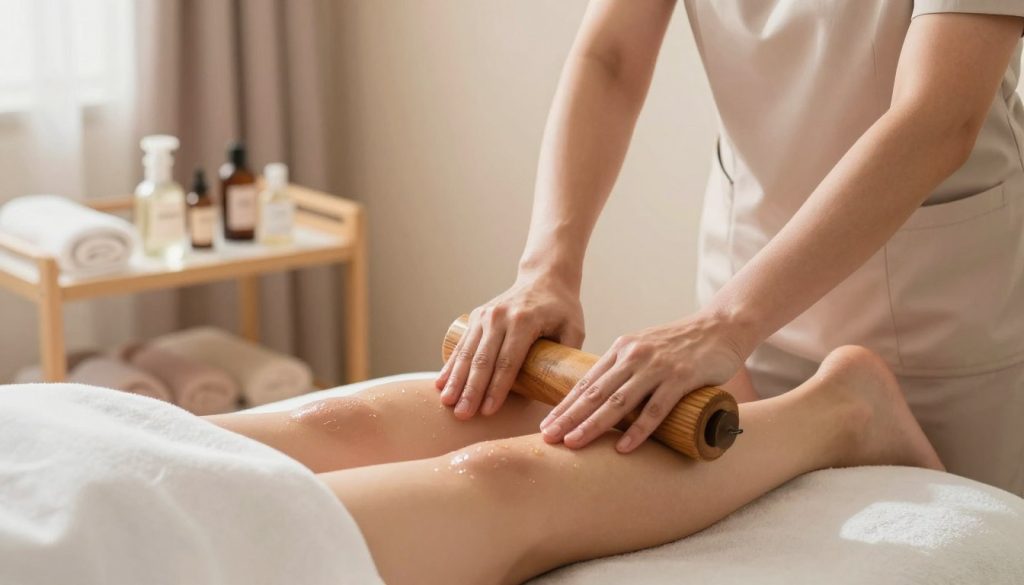
Have you noticed dimpled skin on your thighs and hips? This happens even if you maintain a healthy weight. You’re not alone in this concern.
Cellulite affects about 80-90% of women after puberty. Fat cells push upward against your skin while fibrous tissue bands pull downward. This creates the characteristic dimpled appearance many women experience.
Anti cellulite massage offers a practical way to improve your skin’s texture temporarily. These specialized techniques boost circulation and stimulate lymphatic drainage. They also smooth the skin’s surface.
These treatments cannot permanently eliminate the structural causes of dimpling. However, they provide meaningful short-term improvements with consistent sessions.
Understanding realistic outcomes is essential for your satisfaction. This therapy represents a management strategy rather than a permanent cure. Success depends on maintaining realistic expectations and combining sessions with supportive lifestyle practices.
Key Takeaways
- Cellulite is a normal physiological feature affecting 80-90% of women, not a medical condition requiring treatment
- Specialized therapeutic techniques temporarily improve skin appearance through enhanced circulation and lymphatic drainage
- These treatments cannot permanently eliminate the structural causes of dimpled skin
- Consistent sessions provide meaningful short-term improvements in skin texture and smoothness
- Realistic expectations are crucial for satisfaction with treatment outcomes
- Combining manual therapy with lifestyle practices enhances overall results
What is Anti-Cellulite Massage?
Cellulite reduction massage targets factors that make dimpled skin more visible. This specialized bodywork treats common problem areas like thighs, buttocks, abdomen, and upper arms. The approach combines manual and mechanical techniques to improve skin texture temporarily.
This treatment works with your body’s natural systems rather than restructuring tissue permanently. Visible improvements require ongoing maintenance to sustain results over time.
Definition and Purpose
Anti-cellulite massage is a therapeutic technique designed to enhance skin appearance temporarily. The primary purpose centers on reducing dimpled texture visibility. This treatment addresses fluid retention, poor circulation, and reduced skin elasticity.
Your therapist applies targeted pressure and manipulation to stimulate tissue response. The goal is creating smoother-looking skin through improved circulation and lymphatic function. Similar to how massage supports overall wellness goals, cellulite treatment offers benefits beyond cosmetic improvements.
How It Works
The physiological mechanisms involve mechanical stimulation of your tissue layers. Therapist pressure and manipulation increase local blood flow significantly in treated areas. This enhanced circulation delivers more oxygen and nutrients to your skin cells.
Lymphatic drainage represents another critical component of how this treatment functions. Your lymphatic system removes excess fluid and metabolic waste from tissues. Massage techniques promote lymphatic flow and reduce fluid accumulation that exaggerates dimpled appearance.
A 2017 systematic review found consistent short-term improvements from massage interventions. Research highlighted particularly strong effects when massage combined with active topical ingredients. Studies documented measurable changes from mechanical massage, manual lymphatic drainage, and tissue manipulation techniques.
Mechanical stimulation may temporarily soften fibrous bands beneath your skin. It can also improve elasticity of overlying tissue, creating smoother surface appearance. However, these effects are temporary because massage doesn’t permanently restructure fibrous septae.
| Massage Mechanism | Physiological Effect | Visible Result | Duration of Effect |
|---|---|---|---|
| Increased Blood Flow | Enhanced oxygen and nutrient delivery to skin cells | Improved skin tone and texture | 24-48 hours post-treatment |
| Lymphatic Drainage | Reduced interstitial fluid accumulation | Decreased puffiness and dimpling | 2-4 days with proper hydration |
| Mechanical Tissue Stimulation | Temporary softening of fibrous bands | Smoother skin surface appearance | 1-3 days depending on technique intensity |
| Improved Skin Elasticity | Enhanced collagen and elastin response | Firmer, more resilient skin texture | Cumulative with regular sessions |
You need to maintain regular treatment sessions for effects to persist. The limitation lies in its temporary nature rather than permanent structural changes.
Benefits Beyond Appearance
Cellulite treatment massage delivers advantages that extend beyond cosmetic improvements. Your muscles in treated areas experience reduced tension and tightness. This can improve your mobility and comfort in daily activities.
Overall skin health often improves through regular massage sessions. Your skin receives better hydration and nutrient delivery. Mechanical stimulation encourages natural renewal processes within your skin cells.
Enhanced body awareness represents another meaningful benefit you may notice. You become more attuned to areas of tension or fluid retention. Many people report significant stress reduction during and after massage sessions.
Temporary circumference reduction may occur due to fluid shifts in your tissues. While this isn’t fat loss, it can affect how clothes fit. These combined benefits support your overall sense of well-being.
The effects from mechanical massage, manual lymphatic drainage, and connective tissue manipulation techniques show measurable improvements in fat mass appearance in women with cellulite, though persistence requires continued practice.
You should view anti-cellulite massage as part of comprehensive self-care. The therapeutic benefits complement the aesthetic goals you have for your skin.
Common Techniques Used in Anti-Cellulite Massage
Professional therapists use various approaches to address cellulite through targeted massage. The cellulite massage techniques available today range from traditional hands-on methods to advanced mechanical devices. Each approach offers distinct advantages depending on your needs and treatment goals.
Your therapist may combine multiple methods during a single session. This integrated approach helps maximize results by targeting cellulite from different angles.
Hands-On Therapeutic Approaches
Manual methods form the foundation of most cellulite treatments. Deep tissue cellulite massage uses firm pressure and slow strokes to reach deeper tissue layers. This technique potentially helps break u