
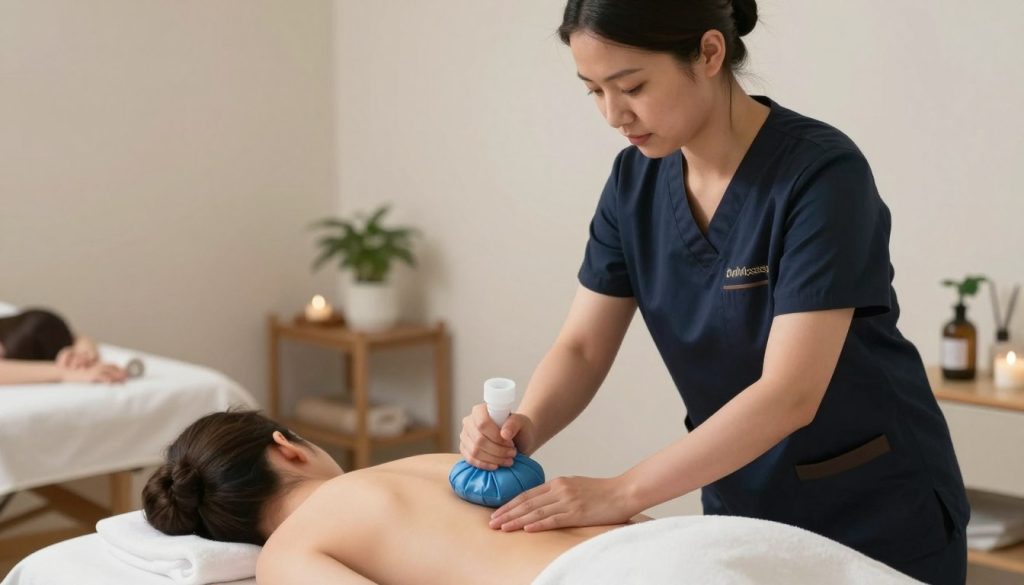
Ice massage combines cold therapy with focused pressure on injured areas. This technique does more than just placing ice on your body. It delivers targeted treatment to specific painful zones.
Harvard Medical School says cold therapy works best right after an injury happens. The treatment reduces swelling and muscle spasms. It may also speed up your recovery time.
Cold slows down cell activity in the hurt area. It makes blood vessels smaller and blocks histamine release. These actions reduce swelling and numb pain.
This ice massage guide shows you when to use this therapy. You’ll learn how to apply it correctly. You’ll discover proper techniques, best timing, and important safety tips.
You’ll also learn which conditions respond best to this treatment.
Key Takeaways
- Cold therapy combined with gentle pressure reduces inflammation and numbs pain more effectively than static cold packs alone
- This treatment works by slowing cellular activity, constricting blood vessels, and blocking histamine release in injured tissues
- The technique proves most beneficial during the hours immediately following an acute injury or for managing chronic pain conditions
- Proper application involves circular or stroking motions on small, localized areas rather than large surface zones
- Medical professionals recognize this method as a safe, accessible, and cost-effective pain management strategy when used appropriately
- Sessions typically last around 10 minutes, progressing through four distinct stages until numbness occurs
- You can repeat treatments up to five times daily with at least one hour between sessions for optimal results
What is Ice Massage and How Does It Work?
Applying ice to injured or sore muscles triggers responses that reduce pain and support tissue repair. Cold therapy massage combines temperature manipulation with targeted pressure. Sports medicine and physical therapy widely accept this approach because it addresses multiple symptoms simultaneously.
Ice activates several biological systems at once. Your nervous system responds to the cold sensation. Your circulatory system adjusts blood flow patterns.
Your immune system modifies its inflammatory response. These coordinated changes create an environment that promotes healing while minimizing discomfort.
Understanding the Science Behind Ice Massage
Your body initiates a protective response the moment ice touches your skin. Blood vessels near the surface immediately constrict in a process called vasoconstriction. This narrowing reduces blood flowing to the affected area, limiting fluid accumulation in damaged tissues.
Harvard Medical School states that applying cold can reduce swelling by slowing cell activity. It constricts blood vessels and blocks the release of chemicals known as histamines. This biological mechanism explains why ice therapy for muscle recovery works effectively after an injury.
The cooling effect does more than just control swelling. It fundamentally changes how your nervous system processes pain signals. Cold sensations travel along the same neural pathways as pain signals, but they move faster.
Ice overwhelms these pathways, so your brain receives fewer pain messages from the injured area. Your cellular metabolism slows down significantly when exposed to cold temperatures. This reduction decreases the release of inflammatory chemicals like prostaglandins that contribute to swelling.
The slower metabolic rate also reduces secondary tissue damage that can occur after the initial injury.
When you suffer a sudden sprain or strain, applying cold can reduce swelling by slowing cell activity, constricting blood vessels, and blocking the release of chemicals known as histamines.
SCOI research indicates that cold therapy helps reduce inflammation, swelling, and acute pain by constricting blood vessels. Ice narrows blood vessels, slowing fluid movement into injured tissue and limiting swelling. That immediate cooling also dulls nerve signals, reducing sharp pain quickly.
The Physiological Effects of Cold on Muscles
Muscle tissue responds uniquely to cold application compared to other body tissues. Reduced temperature decreases muscle spasm activity. This effect proves particularly beneficial if you experience cramping or involuntary contractions following injury or intense exercise.
Your muscles contain specialized pain receptors called nociceptors. These receptors detect potentially harmful stimuli and send warning signals to your brain. Cold temperatures reduce nociceptor activity, providing temporary pain relief lasting from minutes to hours.
The depth of cooling determines the extent of therapeutic benefits you receive. Superficial cooling affects your skin and tissues within approximately one inch of the surface. This level reaches most soft tissue injuries and provides adequate pain relief for many conditions.
Deeper tissue cooling requires longer application times. It may not be achievable with standard ice massage techniques.
A fascinating rebound effect occurs when you remove the ice from your skin. Your blood vessels dilate again in a process called reactive hyperemia. This dilation brings fresh, oxygen-rich blood to the area, delivering nutrients that support healing.
The alternating constriction and dilation create a pumping effect. This helps remove waste products from damaged tissues.
Understanding these physiological mechanisms helps you appreciate why timing matters with cold therapy massage. The initial vasoconstriction controls acute inflammation. The pain-blocking effects provide immediate comfort.
The metabolic slowdown protects tissues from further damage. The reactive hyperemia phase supports long-term recovery.
Your body’s response to cold application follows predictable stages. During the first few minutes, you feel intense cold and possibly discomfort. Between five and ten minutes, the area becomes numb as nerve conduction slows.
After ten to fifteen minutes, your tissues reach maximum therapeutic cooling. Extending application beyond twenty minutes provides diminishing returns and may risk tissue damage.
Ice therapy for muscle recovery addresses multiple aspects of injury simultaneously. You gain pain control through nerve suppression. You reduce swelling through vascular constriction.
You limit secondary damage through metabolic reduction. You promote healing through the rebound hyperemia effect. This multi-faceted approach explains why cold therapy massage remains fundamental in sports medicine and rehabilitation programs worldwide.
Benefits of Ice Massage for Athletes
Your athletic performance depends on how well you recover. Ice massage delivers specific benefits that can make a real difference. Understanding how cold therapy supports your body helps you optimize your training schedule.
The strategic use of ice massage addresses three primary areas. These areas directly impact your ability to perform at your best