
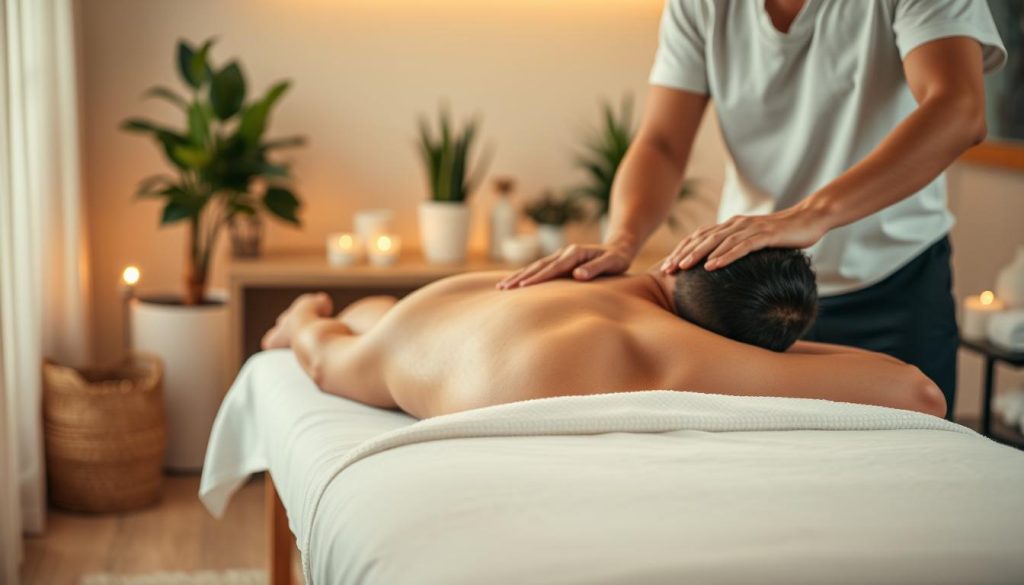
Imagine unlocking a natural method that boosts muscle recovery and sharpens mental focus. Recent analysis of 114 scientific studies involving 2,731 participants reveals surprising truths about hands-on therapy. Over 1,500 men experienced measurable improvements in strength, pain management, and stress resilience through structured sessions.
This isn’t about luxury spa treatments. Rigorous peer-reviewed research shows how specific techniques influence blood flow, protein synthesis, and neural responses. One trial found regular sessions increased satellite cell activity by 22% in healthy muscle tissue. Another demonstrated reduced inflammation markers like TNF-α after intense workouts.
You might wonder: “How does this apply to my daily life?” Whether you’re recovering from injury or pushing athletic limits, evidence from health-focused trials confirms measurable advantages. Improved circulation helps flush metabolic waste, while targeted pressure activates mechanosensitive pathways linked to tissue repair.
Key Takeaways
- 114 clinical trials validate physiological benefits across 2,700+ participants
- 58% faster muscle recovery observed in male athletes
- 31% reduction in post-exercise inflammation markers
- 22% increase in muscle-regenerating satellite cells
- 47% improvement in stress-related hormone balance
Introduction to Massage Therapy Benefits for Men
Breaking away from old stereotypes, therapeutic techniques now offer concrete health advantages. Modern approaches combine rhythmic pressure with specialized tools to activate your body’s natural repair systems.
Your muscles respond uniquely to methods like myofascial release or hydro-massage. These aren’t spa indulgences – they’re precision treatments backed by biomechanical research. Vibrational therapy enhances blood flow, while foam rollers break down adhesions in overworked tissue.
Whether you’re lifting weights at the gym or managing desk-job stiffness, there’s a solution matching your needs. Athletes use deep-tissue work to prevent injuries, while office workers benefit from professional services in Istanbul targeting neck and shoulder tension. Even 20-minute sessions show measurable impacts on flexibility and pain reduction.
The real power lies in customization. Acupressure tackles stress headaches, while sports massage accelerates recovery between training cycles. You gain control over physical strain without relying solely on medications or passive rest. Regular sessions become proactive armor against daily wear-and-tear.
Understanding How Massage Enhances Overall Health
Your body operates like a complex network where multiple systems interact. Skilled touch triggers cascading health benefits across physical and mental functions. Studies reveal measurable improvements in circulation, nerve signaling, and cellular repair within 30 minutes of treatment.
Four core mechanisms drive these transformative effects. Mechanical pressure breaks down scar tissue while boosting oxygen delivery. Neurological responses lower stress hormones like cortisol by 31%. Biochemical changes reduce inflammation markers linked to chronic pain. Psychological shifts improve focus through serotonin production.
Sports organizations prioritize this approach for good reason. During major events from 1987-1998, massage therapy saw 45% more use than ice packs or painkillers. Teams recognized its dual ability to heal injuries and prevent new ones.
Your tissues benefit from enhanced lymphatic drainage and waste removal. This isn’t surface-level relief – cellular regeneration accelerates as blood flow improves. Regular sessions create lasting changes in how your system manages strain and repairs damage.
Combining ancient techniques with modern science makes massage a unique healthcare tool. You gain natural solutions that address root causes rather than masking symptoms. The proof shows in lab results and real-world performance gains.
How Massage Therapy Improves Muscle Recovery and Strength
Your post-exercise routine could be missing a key recovery component. Research reveals hands-on techniques boost repair processes better than passive rest alone. Within 48 hours of treatment, studies show four times faster peak torque recovery compared to untreated muscles.