
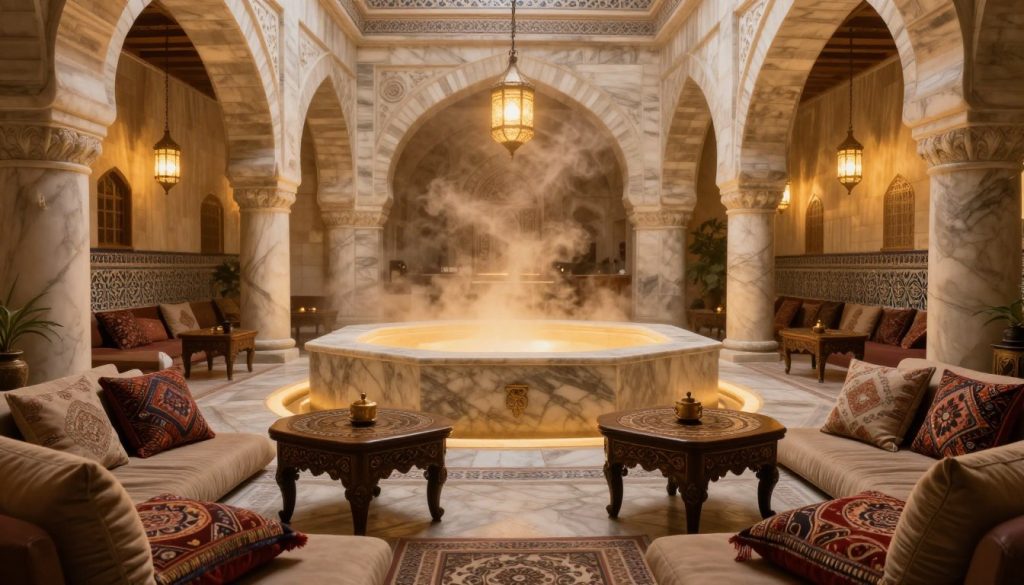
Travelers often call their first Ottoman bathing house visit unforgettable. Ancient rituals combine with heated marble chambers and unique cleansing methods. These elements create something you won’t find in Western spas.
A Turkish bath massage differs from standard wellness treatments. Your visit follows a carefully planned sequence. Your body warms on heated stone platforms first.
You receive vigorous exfoliation next. Luxurious foam cleanses your skin thoroughly. The experience ends with optional aromatherapy oil therapy.
These bathing houses have served Turkey for centuries. They functioned as social gathering spots and physical renewal centers. Marble surfaces and steam-filled domed chambers create a special atmosphere.
Warm water cascades over your shoulders from traditional buckets. This creates an experience unlike anything back home. The combination feels both ancient and refreshing.
This guide walks you through every step of your first visit. You’ll learn what to wear and understand language customs. Tipping practices and privacy concerns are also covered.
Treatment options range from 45-minute express sessions to 2-hour luxury packages. You’ll approach your appointment with confidence instead of anxiety. Preparation helps you relax and enjoy fully.
Key Takeaways
- The bathing ritual follows a structured sequence: heat preparation, exfoliation, foam cleansing, and optional bodywork therapy
- This wellness tradition differs from Western spas by emphasizing communal bathing culture and ancient Ottoman cleansing techniques
- First-time visitors should expect heated marble platforms, steam-filled chambers, vigorous scrubbing, and luxurious foam application
- Treatment packages range from 45-minute express sessions to 2-hour comprehensive experiences
- Understanding proper etiquette, privacy norms, and tipping customs helps you relax and fully enjoy the experience
- The combination of heat, exfoliation, and cleansing provides both physical renewal and cultural immersion
What Is a Turkish Hammam Massage?
The Turkish hammam blends ancient purification rituals with therapeutic relaxation techniques. A traditional hammam spa treatment centers on heat, steam, cleansing, and structured relaxation. Unlike standard spa visits, the hammam experience follows a carefully designed sequence.
Warmth prepares your body before any hands-on treatment begins. This distinctive wellness practice stands apart from typical massage services.
Modern hammams evolved from historic bathhouses once part of everyday Ottoman Empire life. The hammam serves multiple purposes beyond simple washing. People gathered to socialize, rest, and escape the heat.
Today, these spaces still fulfill that role. Locals and visitors mix in the steam, chatting quietly. The day’s noise fades outside while relaxation takes over.
Origins and Cultural Heritage
The Ottoman hammam spa service traces its roots back hundreds of years. Bathhouses served as essential community centers throughout the Ottoman Empire. These structures functioned as gathering places for hygiene, socialization, and ritual purification.
Historic hammams featured distinctive architectural elements. Domed ceilings included small glass openings that created atmospheric light shafts. These beams illuminated the bathing chambers throughout the day.
The centerpiece was the heated marble platform called the göbektaşı, meaning “belly stone.” Separate sections for men and women maintained cultural privacy standards. The hammam wasn’t merely a place to bathe—it was a social institution.
Business deals were negotiated within these walls. Marriages were arranged, and community bonds strengthened through shared rituals.
Traditional attendants developed specialized techniques passed down through generations. Tellaks served men while natırs attended women. These professionals understood how to use heat, pressure, and natural products effectively.
Physical and Mental Advantages
A traditional hammam spa treatment delivers multiple wellness benefits beyond surface-level relaxation. Deep exfoliation removes dead skin cells more effectively than standard scrubs. The traditional kese mitt—a rough-textured glove—sloughs away impurities.
Heat exposure and specialized massage techniques work together to improve circulation. Detoxification occurs through profuse sweating as pores open in the steam-filled environment. Warm marble surfaces provide muscle relaxation while humid air offers respiratory benefits.
Many visitors report noticeably smoother and softer skin for several days afterward. Stress reduction represents another significant advantage. The quiet atmosphere and methodical treatment process encourage mental decompression.
| Wellness Benefit | How It Works | Duration of Effect |
|---|---|---|
| Deep Exfoliation | Kese mitt removes dead skin cells and impurities | 3-5 days of smoother skin |
| Improved Circulation | Heat and massage increase blood flow | Several hours post-treatment |
| Detoxification | Steam opens pores for toxin release through sweating | Immediate and ongoing |
| Muscle Relaxation | Warm marble and foam massage reduce tension | 1-2 days of reduced stiffness |
| Stress Reduction | Quiet environment and ritualistic process calm mind | Variable based on individual |
How Hammam Differs from Western Spas
Understanding the distinctions between an Ottoman hammam spa service and typical Western wellness facilities helps set expectations. Regular massages usually focus primarily on muscle manipulation using oils and lotions. Turkish hammams focus first on heat and cleansing before any massage work begins.
The treatment sequence represents the most fundamental difference. Your hammam experience starts with a 15-20 minute heat preparation phase. This phase opens your pores and softens your skin.
Unlike spas where you remain clothed or draped throughout appointments, hammam participants wear minimal covering. Underwear or swimwear is standard, and you interact directly with heated marble surfaces.
The full body scrub and foam massage are central to the hammam experience. Aromatherapy oil massage serves as an optional add-on rather than the primary ser