What if the key to pushing harder tomorrow isn’t another grueling set, but the right kind of touch today?
That deep, aching stiffness you feel a day or two after a tough session has a name: Delayed Onset Muscle Soreness (DOMS). It’s caused by microscopic damage to your muscle fibers during strenuous exercise. A 2024 study in the International Journal of Turkish Sport and Exercise Psychology by Karadavut and Acar confirms that targeted massage significantly reduces this fatigue.
This isn’t just for elite athletes with personal therapists. This article cuts through the noise. We provide a science-based approach to distinguish truly effective therapeutic recovery techniques from expensive marketing gimmicks that might even cause injury.
You will learn how intense activity impacts your body’s physiology. More importantly, you’ll understand why professional massage therapy is a superior tool for maintaining peak performance and accelerating muscle repair compared to many self-help devices.
Key Takeaways
Delayed Onset Muscle Soreness (DOMS) is caused by microscopic tears in muscle fibers from intense exercise.
Scientific research, including a recent 2024 Turkish study, confirms massage effectively reduces post-exercise fatigue.
Professional massage therapy is a critical tool used by sports clubs to manage athlete recovery.
This guide helps you identify science-backed recovery methods and avoid ineffective or potentially harmful gimmicks.
Understanding the physiology behind soreness allows you to optimize your post-workout routine for better results.
You will learn to differentiate between therapeutic techniques that offer measurable benefits and those that do not.
Introduction to Post-Workout Muscle Soreness
Post-exercise discomfort, known clinically as DOMS, can halt your progress if not managed properly. This soreness directly impacts your ability to train at full intensity. Understanding its nature is the first step toward effective long-term athletic development.
After a strenuous session, your muscles often remain sore for days. This persistent tightness prevents a return to full capacity. Your body requires specific interventions to manage the inflammation and metabolic waste causing this discomfort.
Scientists have conducted numerous clinical trials to determine the best timing and type of massage for relief. Many self-help aids are marketed, but this article evaluates their true safety and effectiveness for your recovery needs.
We explore why muscles feel restricted after a workout, a key indicator of incomplete recovery. By identifying root causes, you can better implement professional advice. This includes understanding which massage methods are supported by science and which are not.
Understanding Delayed Onset Muscle Soreness (DOMS) with Science
Understanding the science behind DOMS transforms post-workout pain from a mystery into a manageable recovery signal.
Delayed Onset Muscle Soreness is the clinical term for that deep ache felt after unaccustomed exercise. Research confirms it’s linked to the disruption of structural proteins within your muscle fibers.
This microscopic damage initiates a local inflammatory cascade. Your body’s repair response to this trauma is what you perceive as stiffness and soreness.
A 2024 meta-analysis by Karadavut and Acar highlights how these exercise-induced perturbations lead to a temporary reduction in your muscular force. This explains the performance drop you often experience days later.
DOMS is not merely a feeling. It’s a measurable physiological state marked by increased creatine kinase levels in your blood, indicating cellular stress.
Grasping this science allows you to differentiate between normal training fatigue and actual tissue damage. It clarifies why professional intervention can be crucial for effective recovery.
How Exercise Leads to Muscle Soreness
Muscle soreness isn’t random. It’s a calculated response from your body to the stress of intense exercise.
Strenuous activity causes microscopic tears in your muscle fibers. The overall structure remains intact, but this damage is real. A 2008 study by Ispirlidis et al. confirmed that repeated eccentric contractions—the lengthening phase of a movement—lead directly to this trauma.
Your body launches an inflammatory repair process. Chemicals from broken-down tissues accumulate, driving the pain you feel.
After your workout, muscles often tighten up. This creates pressure on blood vessels, restricting crucial blood flow.
With reduced circulation, metabolic waste products aren’t cleared efficiently. Fresh nutrients also struggle to reach the damaged area. This double effect exacerbates the soreness and slows repair.
The consequence is a clear drop in your physical performance. Reduced strength and endurance are common. They can prevent you from training at your normal intensity for days.
Understanding this science is powerful. It shows why managing workout intensity and prioritizing recovery are non-negotiable for consistent progress.
Benefits of Massage in Post-Workout Recovery
Beyond simple relaxation, skilled massage delivers concrete physiological advantages that speed up your return to the gym. It relaxes tense muscles by easing the pressure that restricts blood flow to damaged areas. This action is a cornerstone of effective recovery.
Improved circulation assists in flushing out metabolic waste products. It also delivers fresh nutrients and oxygen to your repairing tissues. This dual effects creates an optimal environment for healing.
Science backs these claims with hard numbers. A 2020 review of 29 clinical trials found that massage provides a 13% reduction in post-exercise soreness. It also leads to a 7% increase in flexibility, which helps prevent future injury.
Research, such as the work by Kargarfard et al., supports using massage as a compressive technique to manage inflammation. This approach directly mitigates exercise-induced muscle damage.
The result is a preserved ability to train. Massage is proven to reduce the loss of strength and endurance. This allows you to return to your full training intensity sooner, supporting better long-term performance.
Professional Massage Therapy Options
Your recovery plan gains a powerful edge when you understand the specific types of hands-on care available. Professional therapy offers a range of techniques tailored to your needs, whether you’re an elite competitor or a weekend warrior.
The true effects depend more on the therapist’s skill than the session’s name. A skilled practitioner uses deep knowledge of anatomy to apply the right pressure and method.
Sports Massage Techniques and Their Advantages
Sports massage is designed for active individuals. It targets areas of high tension to support athletic performance and reduce injury risk.
Techniques like deep kneading and focused friction work on overused muscles. This approach helps you maintain training consistency and push your limits safely.
Remedial Versus Swedish Massage Approaches
Remedial and Swedish styles serve different purposes. Remedial therapy addresses specific musculoskeletal complaints with pinpoint accuracy.
In contrast, Swedish massage uses flowing strokes to promote general relaxation and circulation. Knowing this difference helps you select the right session for your current recovery goals.
Consulting a professional ensures a customized treatment. They blend techniques like effleurage and petrissage for your unique soreness and mobility needs.
Self-Massage Techniques and Tools
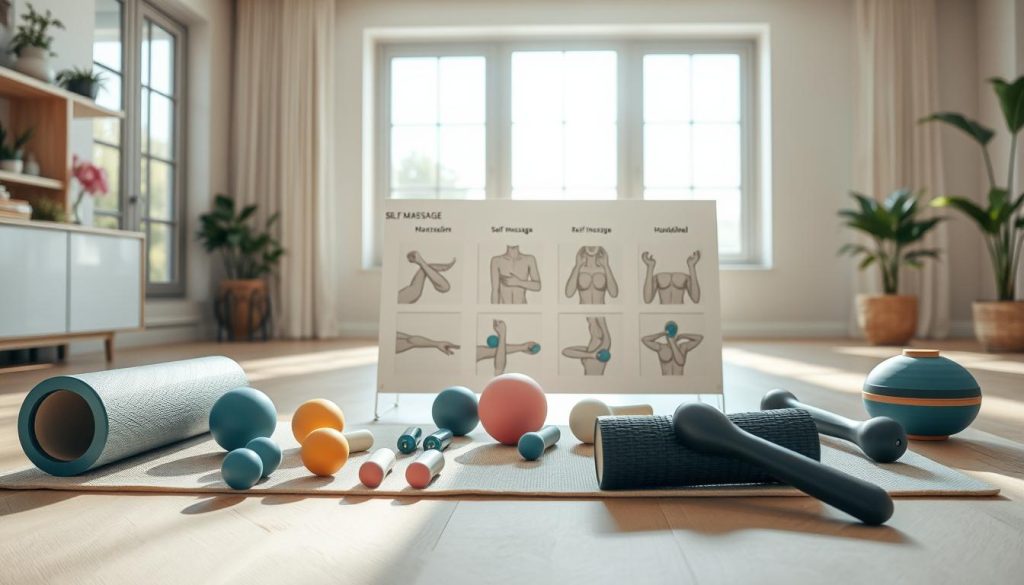
Many athletes turn to rollers and massagers for quick relief, but professional insights reveal a starkly different reality. Popular devices often fall short of delivering real therapeutic value.
You must approach self-care with caution. Incorrect use can lead to unnecessary injuries instead of easing your doms.
Manual Massage Devices and Rollers
Foam rollers and massage balls are ubiquitous in gyms. Dr. Graeme, a chiropractor with 27 years of experience, notes many people hurt themselves using these tools for minimal benefit.
Clinical evidence supports this. A review of 11 trials showed foam rollers offer minimal results compared to professional massage therapy.
Your body often tenses up when you use a roller. This counteracts the goal of relaxation and can hinder proper rest.
Vibration Versus Percussion Massagers
Not all electric massagers are equal. Understanding their mechanisms is crucial for your safety and recovery.
Vibration units penetrate muscle tissue effectively and safely. In contrast, percussion devices like massage guns pose significant risks.
Feature
Vibration Massagers
Percussion Massagers
Primary Mechanism
Oscillating vibrations
High-impact pulses
Muscle Penetration
Effective for soreness relief
Can be overly aggressive
Safety Profile
Generally low risk
Potential for serious injury
Skill Required
Low to moderate
High – professional guidance advised
Applying the correct pressure is a skilled therapy technique. Self-users frequently lack this ability, which limits the effectiveness of any tissue massage they attempt.
Choose tools wisely. Prioritize safety and proven techniques to manage your post-exercise soreness effectively.
The Science Behind Increasing Blood Flow and Reducing Inflammation
Scientific research reveals that targeted touch does more than soothe—it fundamentally alters your physiology. The core mechanisms are enhanced circulation and controlled inflammatory response.
These processes work together to accelerate repair. They transform your recovery from a passive wait into an active, managed event.
Increasing blood flow is fundamental. It delivers oxygen and nutrients directly to damaged muscle fibers. Enhanced circulation also powers the lymphatic system.
This dual action helps flush metabolic lactic acid and other waste products from your tissues. Clearing this acid reduces the chemical pressure causing pain.
Endorphin Release and Muscle Relaxation
Skilled massage stimulates your body to release endorphins. These natural chemicals act as powerful, built-in painkillers.
They lower your perception of discomfort after strenuous activity. This state of relaxation is essential for long-term healing and performance.
Modern techniques like vibration therapy operate at 30-55 Hz. This specific frequency range ensures therapeutic benefits reach deep muscles.
Studies show just five minutes of this method can outperform fifteen minutes of traditional manual massage. It applies effective pressure without strain.
Reducing inflammation is equally critical. Massage helps minimize the production of inflammatory cytokines.
This action directly curtails the body’s excessive stress response to intense training. Managing this inflammation is key to alleviating deep soreness.
Review of Clinical Trials and Evidence
The effectiveness of hands-on therapy is no longer a matter of anecdote but of rigorous clinical data. A vast body of research now provides clear answers for managing post-exercise discomfort.
These studies form the foundation for modern recovery protocols. They help you distinguish proven methods from less effective alternatives.
Key Scientific Findings on Massage Effectiveness
Recent analyses offer compelling numbers. A 2020 review of 29 clinical studies found that massage provides a 13% reduction in DOMS.
It also leads to a 7% increase in muscle flexibility. This directly supports better training readiness.
The 2024 meta-analysis by Karadavut and Acar examined 99 studies. It concluded that massage is the most powerful technique for recovering from DOMS.
Clinical trials also show it reduces inflammatory markers like C-reactive protein. Managing this inflammation is key to alleviating deep soreness.
Recovery Method
DOMS Reduction
Key Benefit
Study Scale
Therapeutic Massage
13% avg. reduction
7% flexibility increase
29-trial review (2020)
Vibration Massage
Excellent in 8 of 11 trials
Speeds recovery process
11 clinical trials
Stretching
Less effective
Moderate fatigue management
Comparative studies
Electrostimulation
Lower perceived fatigue reduction
Variable results
Multiple trials
Interpreting Study Results in Recovery Research
Understanding these results requires looking at specific biomarkers. Recovery research often measures markers like interleukin-6.
Out of 11 clinical trials on vibration massage, 8 showed excellent results in reducing DOMS. This consistency is important for athletes.
This article synthesizes the latest findings. It provides an evidence-based perspective on optimizing your recovery and maintaining performance.
A Guide to Massage for Post-Workout Muscle Soreness
The expertise of a trained professional is the cornerstone of effective post-exercise care.
Research indicates that receiving a massage shortly after your workout yields superior recovery benefits. This timing helps reduce the duration and intensity of DOMS in your muscle tissue.
A skilled therapist assesses your specific condition. They apply tailored techniques that address your unique soreness patterns. Their knowledge is more critical than the specific name of the method used.
This hands-on approach is proven to increase flexibility by 7%. That improvement supports athletic performance and lowers the risk of muscle tears.
Incorporating regular sessions into your routine is wise. Scheduling maintenance once or twice per week maintains tissue health. Regular sessions are a proactive investment in your long-term recovery.
This article summarizes these best practices for optimal recovery. They ensure you have the knowledge to support your body’s healing process effectively.
Optimizing Timing and Frequency for Massage
Optimal recovery hinges on aligning your massage schedule with your body’s physiological windows. When you apply therapeutic touch matters as much as the technique itself.
Research shows immediate application after training is best. It mitigates the initial inflammatory response that leads to DOMS. This timing prepares your muscles for the next day’s activity.
Scheduling regular maintenance once or twice weekly supports long-term tissue health. It helps prevent injuries during heavy training cycles. Your frequency should match your sport’s specific demands.
Timing Strategy
Primary Benefit
Recommended For
Pre-Workout
Prepares muscle tissue
Athletes before intense sessions
Post-Workout (Immediate)
Reduces soreness & DOMS
Swift recovery after exercise
Daily During Recovery
Maintains circulation
Peak performance phases
Weekly Maintenance
Prevents chronic tightness
Consistent heavy training
This article advises tailoring your massage frequency to your personal recovery needs. Integrating sessions pre- and post-workout maximizes benefits. A strategic approach ensures your muscle health and minimizes soreness.
Integrating Massage with Other Recovery Strategies
Maximizing your bounce-back from tough workouts requires a team effort, not a single superstar technique. The best results come from a holistic system where each element supports the others.
This coordinated approach ensures comprehensive healing. It lets you perform consistently through your entire training cycle.
Combining Massage with Hydration and Nutrition
Think of nutrition and hydration as the building blocks for repair. Your massage session helps deliver these materials to your muscles.
Proper fuel is essential for fixing the microscopic damage from exercise. It directly supports the benefits of your hands-on therapy.
Adequate rest and active recovery are also crucial. They create the ideal environment for your body to adapt and grow stronger.
Recovery Component
Primary Function
Synergy with Massage
Hydration
Transports nutrients & removes waste
Enhances circulatory benefits of massage
Protein & Nutrient Intake
Rebuilds damaged muscle tissue
Provides raw materials for the repair process massage facilitates
Adequate Sleep & Rest
Critical hormonal & neural recovery
Allows the relaxation from massage to translate into deeper healing
Active Recovery (e.g., walking)
Promotes blood flow without stress
Complements the circulation boost from massage, reducing DOMS
This multi-faceted strategy gives athletes a real edge. It addresses all aspects of physical health to improve long-term development and performance.
This article shows how to build a balanced plan. Integrating these elements manages soreness and fuels your future success.
Practical Advice and Athlete Tips
Customizing your post-exercise care is the secret weapon for consistent performance gains. The best approach listens to your body and adapts over time.
This article provides actionable steps to refine your routine. You will learn to match techniques to your sport’s unique demands.
Expert Advice for Maximizing Recovery
Your sport dictates your ideal massage focus. Endurance athletes should prioritize methods that boost circulation and flexibility.
These techniques support long-distance training and overall performance. Strength athletes often need deeper work to relieve tight muscles after heavy lifts.
Regularly assess your body’s response to each session. Adjust the pressure, frequency, and style based on your feedback.
Monitoring your progress is key to maximizing recovery. Expert guidance, like that found in a post-event sports massage journal, can help you tailor your plan.
Real-World Success Stories and Case Studies
Consistent therapeutic massage shows real results. Many competitors report significantly improved recovery times and fewer injuries.
Focusing on circulation helps manage lactic acid buildup from intense training. This reduces overall soreness and accelerates repair.
These success stories prove that a personalized strategy works. For more on fine-tuning your approach, consider expert advice on relieving pain.
You now have the tools to build a smarter recovery program. Tailor it to your goals for the best possible results in your athletic career.
Safety Considerations and Avoiding Improper Techniques
Not all massage tools are created equal, and some pose serious risks to your well-being. Marketers often make false claims about devices like percussion massagers, which can lead to severe injuries.
Applying too much pressure or using tools on inappropriate areas increases your risk. Clinical trials operate under supervision, but real-world use frequently lacks proper instruction.
This article emphasizes that safety is paramount for effective recovery. Avoid any massage device that hasn’t undergone rigorous testing for your muscletherapy.
Future Trends and Innovations in Massage Therapy
Innovation is focusing on safer, more effective ways to deliver therapeutic vibrations. These advancements aim to support athletes with reliable at-home recovery solutions.
Future tools will likely minimize risk while optimizing repair for your muscles. This evolution helps you manage doms and soreness without compromising safety.
Emerging trends also target lactic acid clearance to reduce acid buildup. This supports better training readiness and overall performance.
Future Trends and Innovations in Massage Therapy
Your next recovery tool might feature advanced vibration mechanisms that treat your entire body in minutes. Innovations like the Ultimate Quad Head Massager use four strong pads for efficient, professional-grade therapy.
This represents a shift toward smoother, more comfortable machines. They provide better tissue penetration without the harshness of older models.
The mechanism often involves two rockers working opposite each other. This creates balanced vibration that is both gentle and effective for your muscles.
Dr. Graeme’s General Purpose Massager has sold about 100,000 units. It is widely used by chiropractors and physiotherapists, showing trusted professional adoption.
These trends make high-quality recovery accessible for your personal use at home. You can now manage delayed onset muscle soreness and support trainingperformance with advanced techniques.
Future designs will continue to focus on science-backed results. They aim to optimize blood flow and reduce lactic acidwaste more efficiently.
This evolution helps athletes stay ahead of their recovery needs. It transforms how you approach body health and overall maintenance.
Conclusion
Your long-term success in sport hinges on a simple principle: recover as hard as you train.
This article has detailed the science behind DOMS and how targeted massagetherapy offers measurable recovery benefits. Clinical studies consistently show these techniques reduce musclesoreness and improve flexibility.
Integrating professional therapy and safe tools into your routine manages lactic acid and clears metabolic waste. This supports better blood flow and reduces injury risk, leading to superior trainingperformance.
For athletes, prioritizing your body‘s repair is non-negotiable. Make intelligent recovery a cornerstone of your plan to achieve lasting results.
FAQ
What exactly is delayed onset muscle soreness (DOMS)?
Delayed onset muscle soreness, or DOMS, is the muscle pain and stiffness you feel 24 to 72 hours after intense physical activity. It’s not caused by lactic acid buildup, but by microscopic tears in your muscle fibers from unfamiliar or strenuous exercise. This triggers a local inflammatory response, leading to the discomfort you experience.
How does a massage actually help my muscles recover after a tough workout?
Massage therapy aids recovery through several physical mechanisms. It increases local blood flow, which helps deliver fresh oxygen and nutrients while flushing out metabolic waste products. The manual pressure can also help reduce inflammation and promote muscle relaxation, which may lessen pain perception and improve your range of motion for your next training session.
Is it better to get a massage right after my workout or wait a day?
Timing depends on your goal. For immediate relaxation and to kickstart circulation, a gentle session post-workout can be beneficial. However, for addressing the peak effects of DOMS, many athletes find a massage 24 to 48 hours later is most effective for reducing soreness and improving function. Listen to your body and avoid deep pressure on acutely inflamed muscles.
What’s the difference between a sports massage and a regular Swedish massage for recovery?
A Swedish massage generally focuses on overall relaxation using long, gliding strokes. A sports massage is a more targeted therapy designed for athletes. It uses deeper pressure and specific techniques like compression and cross-fiber friction to address problem areas, enhance flexibility, and support athletic performance and faster recovery from training.
Can I use self-massage tools like foam rollers effectively?
A> Absolutely. Self-myofascial release with tools like foam rollers or percussion massagers is a highly effective and convenient recovery strategy. Using a roller applies pressure to tight muscles, helping to break up adhesions, improve tissue elasticity, and increase blood flow. Brands like Hyperice or TriggerPoint offer popular devices for this purpose.
Are there any risks to getting a massage when I’m very sore?
Yes, if not performed correctly. Communication with your therapist is key. Excessive pressure on severely damaged muscles can increase inflammation and risk of injury. Always inform your massage therapist about your pain level. A light to moderate pressure session is often recommended over deep tissue work when DOMS is at its peak.
Should I combine massage with other recovery methods?
A> For optimal results, yes. Integrate massage with foundational recovery pillars. Proper hydration helps transport nutrients and waste, while nutrition—especially protein intake—supports muscle repair. Combining massage with active recovery, like light walking, and sufficient rest creates a synergistic effect for reducing overall soreness and boosting physical performance.