Do you struggle with stubborn muscle tension that never seems to go away? You’re not alone in feeling frustrated by tight spots. These problem areas limit your movement and cause daily discomfort.
A massage ball is a simple yet powerful tool designed for self-myofascial release. This compact device helps you target specific trigger points in your muscles and fascia. Unlike larger equipment, it pinpoints exactly where your body needs relief.
These portable tools typically measure 2 to 5 inches in diameter. You can use them at home, at work, or while traveling. They offer an affordable solution for addressing muscle knot relief between professional therapy sessions.
Research shows that self-massage techniques with specialized tools can improve your flexibility. They also reduce soreness after exercise. Controlled pressure to tight areas increases blood flow and helps muscles recover faster.
This practical approach puts muscle health control directly in your hands. You can address tension and enhance mobility on your own schedule.
Throughout this guide, you’ll learn safe, effective methods for self-treatment. These techniques work for desk-related stiffness and post-workout soreness. They help you maintain better comfort in your active lifestyle.
Key Takeaways
Self-myofascial release tools target specific muscle tension points that cause discomfort and restricted movement in daily activities
These compact devices range from 2 to 5 inches in diameter and offer portable, affordable relief for various body areas
Research supports improved flexibility and reduced post-exercise soreness through regular use of self-treatment tools
Proper pressure application increases blood circulation and helps flush metabolic waste from compressed tissues
Learning correct techniques empowers you to maintain muscle health at home, work, or while traveling
These tools complement professional therapy by providing convenient relief between appointments
Understanding the Benefits of a Massage Ball
Research shows that regular massage ball use improves flexibility, recovery, and stress management. These compact tools deliver benefits beyond temporary pain relief. Self-myofascial release helps both immediate physical improvements and long-term wellness gains.
Massage balls apply targeted pressure to soft tissue. This triggers mechanical and neurological responses in your body. The pressure releases tension in the fascia—the connective tissue wrapping around your muscles.
Rolling over tight spots performs your own trigger point therapy. This addresses small, irritable areas in your muscles. These spots can cause widespread discomfort throughout your body.
Physical Benefits of Self-Massage
Your body responds to massage ball work with concrete, measurable changes. Sports medicine research has documented these changes extensively. Self-myofascial release can increase your flexibility and joint range of motion.
These improvements happen without impairing your maximal strength or power output. You can safely use muscle recovery tools before training or competition. This means no worries about performance decrements.
The pressure you apply promotes immediate blood circulation to targeted areas. Fresh oxygen and nutrients flow into the compressed tissue. Your body simultaneously flushes out metabolic waste products like lactic acid.
Massage balls reduce delayed-onset muscle soreness (DOMS). Research shows people experience lower soreness ratings after intense training. Your muscles feel better 24-72 hours following your workouts.
Regular practice helps you maintain mobility throughout your joints. It prevents minor tension from developing into chronic issues. Spending a few minutes scanning your body teaches you where you hold tension.
You’ll notice how patterns change with stress levels and sleep quality. Training load variations also affect these patterns. This awareness helps you understand your body better.
Mental Health Benefits
Self-massage practice offers significant psychological advantages. Dedicating 5-10 minutes to work through tension creates a meditative experience. This focused attention reduces stress and anxiety levels significantly.
Deep breathing while applying pressure activates your parasympathetic nervous system. This is your body’s natural “rest and digest” mode. This shift counteracts the chronic stress response many people experience.
Pausing your day to address physical tension sends a powerful signal. Your nervous system understands that you’re safe and can relax. This simple act creates meaningful psychological benefits.
Improved body awareness represents another crucial mental benefit. You gain a greater sense of control over your physical wellbeing. You’ll recognize early warning signs of overuse before they become injuries.
This heightened awareness creates a positive feedback loop. The more you practice, the better you understand your body’s signals. You learn to distinguish between productive muscle fatigue and problematic strain.
How Massage Balls Enhance Recovery
Athletes and fitness enthusiasts find particular value in trigger point therapy. It accelerates recovery processes significantly. Studies show myofascial release techniques reduce soreness and maintain better performance.
Enhanced recovery comes from multiple mechanisms working simultaneously. Improved circulation delivers raw materials your muscles need to repair. The mechanical pressure breaks up adhesions in fascial tissue.
The neurological reset reduces excessive muscle tone. This saves energy and improves coordination. Using a massage ball for 5-10 minutes after your workout kickstarts recovery.
Your muscles are most receptive immediately after exercise. Incorporating it on rest days maintains mobility. This provides active recovery without adding training stress.
Recovery Aspect
Without Massage Ball
With Regular Massage Ball Use
Time to Improvement
Muscle Soreness (DOMS)
Peak at 48-72 hours
Reduced soreness ratings by 30-40%
24-72 hours post-exercise
Range of Motion
Gradually returns over days
Small-to-moderate acute improvements
Immediate to 24 hours
Power Performance
Potential decline during soreness
Better maintenance of output
Between training sessions
Training Readiness
Variable, often compromised
Improved subjective readiness
Next training session
Maximizing recovery benefits requires consistency and integration. Massage balls work best with proper nutrition, adequate sleep, and progressive training. Think of self-myofascial release as one powerful component in your complete recovery toolkit.
You can adjust warm-ups toward your real sticking points. This targeted approach makes your preparation more efficient and effective. The body awareness you develop helps you pair myofascial release with posture corrections.
Choosing the Right Massage Ball for You
Not all massage balls deliver the same results. Understanding differences between types, materials, and sizes is essential for your selection. Your individual needs will guide you toward the best option.
These needs include pain tolerance, target muscle groups, and experience level. Many people find that owning multiple massage balls works better. Different tools for different purposes beats searching for one perfect solution.
Types of Massage Balls Available
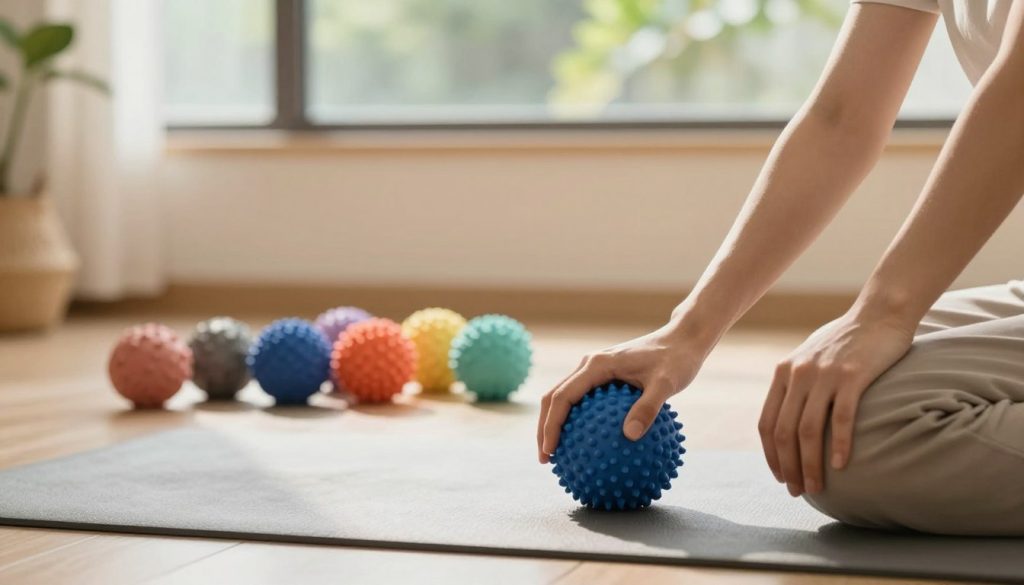
The massage ball market offers several distinct designs. Each serves specific purposes for your self-massage routine. Standard smooth balls come in various sizes and provide consistent pressure distribution.
These versatile tools work well for general full-body massage. They are ideal for beginners just starting their self-care journey.
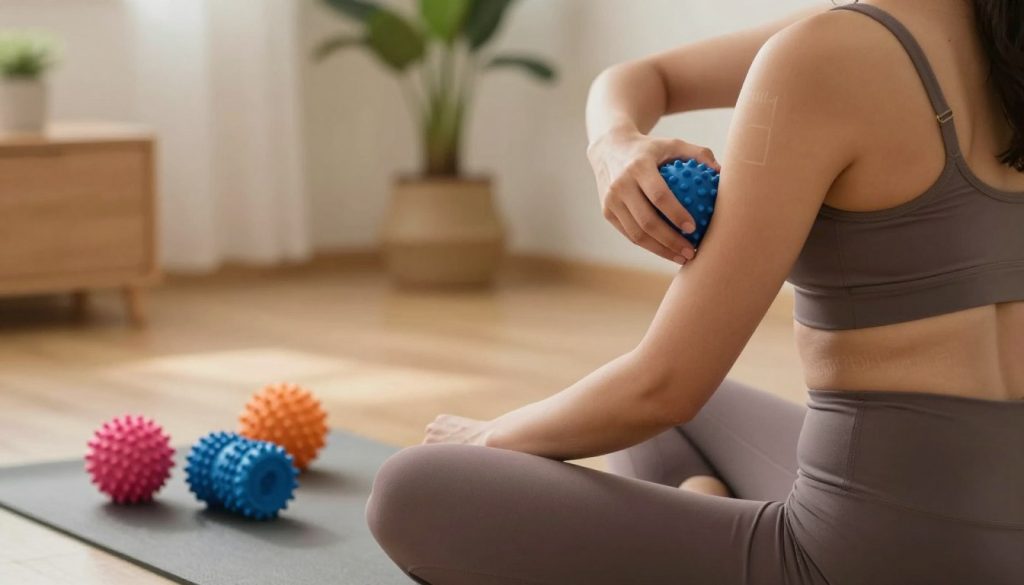
A spiky massage ball features raised bumps or points. These concentrate pressure into smaller contact areas. Textured surfaces stimulate specific pressure points more intensely than smooth versions.
Some people appreciate spiky balls for thick muscle groups like glutes. They also work for addressing plantar fascia in the feet. The intensity can feel overwhelming on sensitive areas.
Peanut-shaped or double balls consist of two spheres joined in the middle. This creates a channel that protects your spine during massage. The design lets you work muscles on either side of your vertebrae simultaneously.
You avoid placing dangerous pressure directly on spinal bones. These specialized tools are particularly valuable for releasing tension. They work well in your upper and lower back.
Handheld massage balls attach to handles or grips. This gives you more control over pressure application. These designs benefit people who struggle with floor exercises.
They also help those who want to target specific areas while standing. The added leverage helps you reach difficult spots like your shoulder blades. You won’t strain your arms or get down on the ground.
Each type serves different needs in your self-massage practice. A small, firm deep tissue massage ball delivers focused pressure. This is perfect for stubborn trigger points.
Larger, softer options distribute pressure over broader areas. They create a gentler experience for sensitive regions. These work well on your chest or hip sides.
Material and Size Considerations
Size significantly impacts your massage experience and the results you achieve. Massage balls typically range from 2 to 5 inches in diameter. Each size category offers distinct advantages.
Size Range
Best For
Pressure Type
User Level
Small (2-2.5 inches)
Feet, calves, forearms, between shoulder blades
Deep, precise, intense
Experienced users
Medium (2.5-3.5 inches)
Full-body general use
Balanced depth and comfort
Most users
Large (4-5 inches)
Hips, glutes, lats, wall work
Gentle, spread over surface
Beginners, sensitive areas
Small balls like standard lacrosse balls provide the most concentrated pressure. They excel at reaching precise points for lacrosse ball massage techniques. They can feel too aggressive if you’re new to self-myofascial release.
The focused contact makes them perfect for working the arch of your foot. They also find specific knots in your glutes.
Medium-sized balls offer the most versatility for everyday use. They work across different body parts. They provide enough depth to effectively reach muscle tissue without creating excessive discomfort.
This size works well for your thighs, upper back, or hip flexors.
Large balls spread your body weight over a bigger surface area. This reduces intensity naturally. They work exceptionally well for larger muscle groups and for leaning against walls.
However, they sacrifice some precision when targeting small, stubborn knots.
Density and material composition determine how hard the pressure feels. Soft foam or air-filled balls compress easily under body weight. They are appropriate for beginners or older adults.
They provide gentle stimulation without risk of bruising or excessive soreness.
Medium-firm balls made from EVA foam or rubber cores strike a balance. They work for most everyday users. They offer enough firmness to effectively reach into tissue without feeling punishing.
This density level provides therapeutic benefits without overwhelming your nervous system.
Very firm balls are constructed from solid rubber, standard lacrosse equipment, or cork. They deliver intense pressure that experienced users seek. These work well for spiky massage ball applications on thick, stubborn muscles.
They can be too aggressive near bony areas. Beginners should avoid them at first.
Material properties affect durability, grip, and overall feel. Rubber and lacrosse-style balls are inexpensive and extremely durable. They provide excellent grip against walls.
The trade-off includes a noticeable rubber smell. They may feel excessively hard for sensitive users.
Silicone and TPE (thermoplastic elastomer) balls offer slightly softer contact. They provide more comfortable contact with your skin. They provide excellent non-slip properties and clean easily with soap and water.
These premium materials typically cost more. They deliver a better experience for regular use.
Cork and wooden balls appeal to environmentally conscious users. They seek sustainable options. They’re biodegradable or recyclable and feature natural texture for good grip.
These materials tend to be quite firm. They may feel sharp on areas with less muscle padding.
Texture also plays an important role in your experience. Smooth balls distribute pressure evenly. They glide comfortably over clothing or bare skin.
They’re ideal for sensitive areas or learning proper technique.
Textured or spiky massage ball options concentrate pressure into smaller contact points. They use raised bumps or ridges. Some people find this helpful for penetrating thick tissue.
The sensation can be too intense for many body areas. Most beginners should avoid them.
Recommended Brands for Quality
Selecting a reputable manufacturer ensures you receive a durable, effective tool. Quality massage balls maintain their firmness. They resist cracking or deterioration and provide appropriate grip.
They won’t become sticky or slippery over time.
Tune Up Fitness produces Yoga Tune Up Therapy Balls. These are specifically engineered for self-massage applications. These balls feature carefully calibrated density.
They’re firm enough to release tension effectively. They’re soft enough to avoid bruising nerves or creating excessive soreness. The material conforms to your body’s natural contours.
TriggerPoint manufactures massage balls with consistent quality control. They feature appropriate surface textures. Their products are widely available and backed by positive user reviews.
Established sports equipment companies also produce reliable options. These hold up to regular use.
Look for consistent firmness throughout the ball’s lifespan. Cheaper foam balls often compress permanently. They lose effectiveness quickly.
Durable outer materials should resist cracking, flaking, or becoming tacky. This matters over extended use.
Appropriate grip keeps the ball stable against walls or under your body. It shouldn’t catch uncomfortably on clothing. A basic lacrosse ball from sporting goods stores can serve as an excellent starting point.
It offers low cost. Purpose-designed massage balls often provide better experiences. They’re engineered specifically for deep tissue massage ball therapy with optimized density and materials.
In Turkey, massage balls are increasingly available through online retailers. You can also find them at fitness equipment stores and wellness shops. Many pharmacies now stock basic options as self-care awareness grows.
Starting with one versatile medium-sized, medium-firm ball is often the smartest approach. Expand your collection based on specific needs you discover.
The “right” ball for you depends on multiple individual factors. These include your pain tolerance, target areas, and experience level. Consider whether you prefer floor work or wall-based techniques.
Most people eventually find that owning two or three different balls works best. This addresses various needs more effectively than relying on a single option.
Techniques for Effective Self-Massage
Effective self-massage requires more than rolling a ball over sore muscles. It demands proper technique and mindful application. Understanding fundamental self-massage techniques helps transform your massage ball into targeted relief.
The methods you choose determine your results. Proper application creates genuine muscle release. Poor technique just bruises muscles without benefit.
Professional therapists use specific protocols you can adapt at home. These proven techniques work with your body’s natural responses. Correct application activates neurological changes that promote muscle relaxation and recovery.
Core Methods for Muscle Release
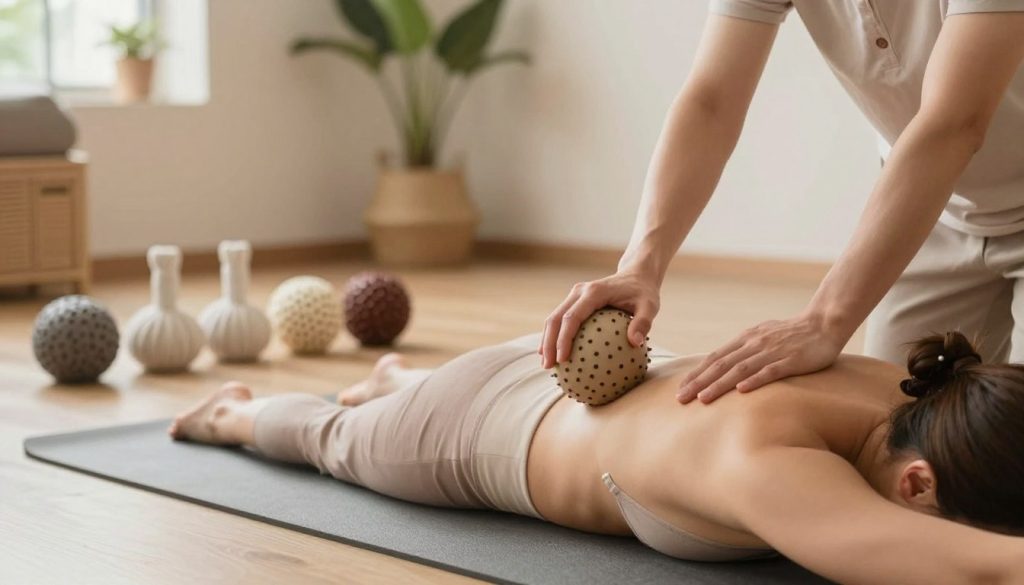
Successful trigger point therapy starts with static compression. Position your massage ball on a tender spot. Hold steady pressure for 15-60 seconds.
Sustained pressure triggers a neurological response. This signals your muscle to relax. Your body naturally releases tension with proper pressure.
Aim for pressure between 5-6 out of 10 on discomfort scale. This “good hurt” level allows tissue release. It won’t activate your body’s protective tension response.
If you hold your breath or clench your jaw, you’re pressing too hard. Back off the pressure immediately. Effective massage should never cause you to brace against pain.
The tack and stretch method adds movement to static compression. Maintain pressure on a trigger point while moving the adjacent joint. For example, press the ball into your upper shoulder while raising your arm.
This approach breaks up deep tissue adhesions more effectively. Research suggests movement under pressure helps release fascial restrictions. These restrictions contribute to chronic tightness and limited mobility.
Slow rolling differs dramatically from rapid back-and-forth movements. Move the ball very slowly—taking 3-5 seconds per inch. Pay attention to areas of increased tenderness.
Pause and hold pressure on particularly tight spots. This allows deeper tissue release. Moving too quickly misses important trigger points.
Cross-fiber massage involves moving perpendicular to muscle fiber direction. This technique breaks up fascial restrictions more effectively. It addresses tissue from multiple angles.
Small circular motions on tender spots provide another valuable approach. These slow circles help tissue release from different directions. They often uncover exact locations of deep trigger points.
Static compression: Hold pressure for 15-60 seconds on tender spots
Tack and stretch: Maintain pressure while moving adjacent joints
Slow rolling: Move 3-5 seconds per inch, pausing on tight areas
Cross-fiber work: Roll perpendicular to muscle fiber direction
Circular motions: Small, slow circles from multiple angles
Body-Specific Application Protocols
Each muscle group requires slightly different positioning and technique. Your upper trapezius tightens from desk work. It responds well to wall-based pressure.
Place the ball between your shoulder and a wall. Lean your body weight into it. Make small circular motions for best results.
Add the tack and stretch by slowly raising your arm. Move it out to the side and overhead while maintaining pressure. This combination addresses both the trigger point and surrounding fascial tissue.
For rhomboid muscles between your shoulder blade and spine, position carefully. Avoid your spine itself. Cross your arms in front of your chest like giving yourself a hug.
This pulls the shoulder blade away from your spine. Use small knee bends to roll the ball up and down. Spend 30-60 seconds on particularly tender spots.
Lower body work requires different approaches based on muscle accessibility. Your glutes respond well to floor-based techniques. Sit with the ball under one side of your buttock.
Cross the same-side ankle over your opposite knee. Lean slightly toward the working side. Roll in small circles to locate tender spots.
Hold each spot for 15-30 seconds. Add a slow knee-toward-chest movement to increase stretch. This enhances tissue release significantly.
Muscle Group
Position
Technique
Duration
Upper Trapezius
Ball between shoulder and wall
Circular motions plus arm raises
30-60 seconds per side
Rhomboids
Between shoulder blade and spine
Slow vertical rolling with knee bends
60 seconds per side
Glutes
Sitting with ball under buttock
Small circles plus knee movement
1-2 minutes per side
Plantar Fascia
Standing with ball under foot arch
Slow rolling from toes to heel
1-2 minutes per foot
Hip flexors require face-down positioning with the ball inside your front hip bone. Support your upper body on your forearms. Gently shift your weight side-to-side.
Slowly bend and straighten the same-side knee. Complete 10-15 repetitions to enhance the release. This movement pattern maximizes tissue response.
For plantar fascia in your foot arch, stand with comfortable weight on the ball. Slowly roll from the base of your toes to just before your heel. Hold tender spots for 10-20 seconds while keeping discomfort below 6 out of 10.
Calf work involves sitting with the ball under the thick part of your calf muscle. Cross your other leg on top to increase pressure if needed. Lift your hips slightly off the floor.
Roll the ball up and down for 30-60 seconds. Find a tender area and pause there. Pump your ankle up and down 10-15 times.
This added movement helps break up adhesions. It improves tissue mobility more effectively than static pressure alone. Movement creates better long-term results.
Neck work requires extra caution and lighter pressure. Stand sideways against a wall. Wedge the ball into the upper part of your shoulder where it meets your neck.
Never roll directly on your spine, avoid floating ribs in your lower rib cage, stay away from kidney areas in the lower back, don’t apply pressure to joints themselves, and avoid any area with sharp or electric pain.
Sessions of just a few minutes per muscle group provide sufficient stimulus. Research suggests frequency of 3-7 days per week depending on training load. Duration should be 1-3 minutes per muscle group.
Total session length should be 5-15 minutes for most people. Consistency beats intensity in self-massage practice. A little bit most days produces better results than occasional hour-long sessions.
Breathing Integration for Enhanced Release
Coordinating your breathing with massage ball work enhances tissue release. It prevents protective tension. Your nervous system responds dramatically to breathing patterns.
Slow, deep breathing signals safety to your body. This allows muscles to release more fully. Breathing coordination maximizes your massage effectiveness.
Before placing the ball on a tender area, take 2-3 deep breaths. Breathe in through your nose and out through your mouth. This preparation settles your system and establishes a relaxed baseline.
As you first apply pressure to a tight spot, exhale slowly. This helps your body accept the sensation. It prevents you from bracing against the pressure.
While holding pressure on a trigger point, maintain slow, rhythmic breathing. Breathe at a pace of 4-5 seconds in and 4-5 seconds out. This activates your parasympathetic nervous system.
It reduces the threat response that makes muscles contract protectively. Proper breathing creates deeper, more lasting release. Your body cooperates instead of resisting.
If you find yourself holding your breath, it signals too much pressure. Effective self-massage should never require you to brace against pain. Back off the pressure until you can breathe comfortably and maintain a relaxed jaw.
Try “breathing into” tight areas as a mental technique. As you inhale, imagine sending breath and space into the tissue under the ball. As you exhale, visualize tension flowing out of that area.
While this is mental visualization rather than literal physiology, many people find it helpful. It helps them relax more fully. This mind-body connection enhances the effectiveness of your physical technique.
End each session with 30-60 seconds of calm, seated breathing. This helps your nervous system integrate the changes you’ve created. It shifts you fully out of any protective tension the deeper pressure work may have triggered.
This approach makes your massage ball sessions serve double duty. They work as both physical recovery work and stress-management practice. You gain multiple benefits from each session.
Safe Practices When Using a Massage Ball
The difference between helpful muscle knot relief and unnecessary soreness lies in your approach. Understanding safety principles protects you from injury while maximizing therapeutic benefits. This section equips you with essential knowledge to practice trigger point therapy effectively and responsibly.
Many people assume that aggressive pressure produces faster results. However, your nervous system responds better to moderate, sustained pressure than painful intensity. Learning to recognize your body’s signals ensures your massage ball becomes a valuable recovery tool.
Avoiding Common Mistakes
The most frequent error people make is applying excessive pressure too quickly. Pressing so hard that your entire body tenses defensively actually increases pain sensitivity. Your nervous system interprets extreme pressure as a threat and triggers protective muscle contraction.
Effective trigger point therapy happens in the “good discomfort” zone. Aim for 5-6 out of 10 on a pain scale. You should feel notable pressure and mild discomfort but still breathe comfortably.
“More pressure isn’t always better—if you push hard enough to make your whole body tense, you may increase pain sensitivity instead of reducing it.”
Another common mistake involves rolling too quickly across muscles. Rapid, vigorous movement doesn’t allow time for the neuromuscular response that creates release. Slow, deliberate movement with pauses on tender spots gives your nervous system time to relax.
Spending too long on one spot also causes problems. Holding pressure for 15-60 seconds benefits tight muscles effectively. Staying on the same point for 3-5 minutes can damage tissue or irritate nerves.
If a spot hasn’t released after 60 seconds, work the surrounding area instead. You can also try again the next day for better results.
Many people make the error of working directly on contraindicated areas. Rolling right down your spine compresses bone rather than muscle, which provides no benefit. Always position your massage ball to either side of the spine.
Here are critical mistakes to avoid:
Pressing directly on bony structures like the spine, kneecaps, or elbows
Using your full body weight on small, dense balls without building tolerance
Working over areas with open wounds, bruising, or active infections
Ignoring pain that intensifies rather than decreases during pressure
Treating massage balls as substitutes for adequate sleep, nutrition, or medical care
Self-massage alone cannot compensate for inadequate recovery practices. Your massage ball is one valuable tool within a comprehensive approach to health. It is not a cure-all for poor lifestyle habits or underlying medical conditions.
Recognizing Body Signals
Learning to interpret what your body tells you during massage ball work empowers you. Productive discomfort has specific characteristics that differ significantly from warning signs. Understanding these differences keeps you safe during treatment.
Beneficial pressure creates a deep, spreading ache localized to the area you’re working. It may refer into nearby regions in predictable patterns. This discomfort gradually decreases in intensity as you maintain pressure and breathe steadily.
The sensation should feel like a “good hurt” that brings relief rather than distress. If you’re exploring options for trigger point massage balls, understanding these sensory differences becomes crucial for safe practice.
Warning signals demand immediate attention. Sharp, stabbing, or electric pain suggests you may be pressing on a nerve. Pain that shoots down your arm or leg indicates possible nerve compression requiring professional evaluation.
Stop immediately if you experience these symptoms:
Numbness, tingling, or sudden weakness in any limb
Pain that intensifies rather than decreases as you maintain pressure
Discomfort so severe you cannot breathe normally
Protective tensing in other body areas away from the massage ball
Symptoms that worsen significantly after your session
Your breathing pattern serves as one of the most reliable real-time indicators. If you find yourself holding your breath, your body signals that pressure is too intense. Back off immediately and reduce the force.
Normal post-massage sensations include moderate soreness or tenderness in worked areas for several hours. This resembles post-workout muscle soreness and should gradually fade. Feeling more relaxed with improved range of motion indicates successful work.
Concerning post-session symptoms include swelling, bruising, or intense pain persisting beyond 24-48 hours. These red flags suggest excessive pressure or underlying conditions requiring professional assessment.
Normal Response
Warning Sign
Appropriate Action
Deep ache that gradually decreases
Sharp, electric, or shooting pain
Stop immediately and reassess technique
Mild soreness for 12-24 hours
Intense pain lasting beyond 48 hours
Reduce pressure and consider professional evaluation
Muscle softening under sustained pressure
Tissue remaining rock-hard despite prolonged work
Work surrounding areas or seek professional guidance
Improved mobility after session
Reduced range of motion or increased stiffness
Apply ice and rest; consult healthcare provider if persistent
Recognizing the difference between tension that releases and tension that resists helps you work smarter. Effective release feels like the muscle gradually softening under the ball. Your breathing deepens, and pain levels drop from a 6 to a 3-4.
Tips for Safe and Effective Use
Certain medical conditions require consultation with a healthcare provider before beginning massage ball work. This precaution protects you from complications that could worsen underlying health issues.
Check with your doctor or physical therapist if you have:
Recent surgery or significant acute injury in the target area
Osteoporosis or advanced degenerative joint disease
Blood-thinning medications or history of blood clots
Active skin infections, open wounds, or severe varicose veins
Uncontrolled diabetes with reduced sensation in extremities
Starting with lighter pressure than you think necessary proves wise, especially when you’re new. Gradually increase intensity over multiple sessions as your tissues adapt to the stimulus. This progressive approach prevents excessive soreness and builds tolerance safely.
Warming up the area before massage ball work increases blood flow and makes tissues more pliable. Spend 2-3 minutes doing gentle movement or light cardio before applying pressure. Follow your session with appropriate stretching to capitalize on improved mobility.
Proper positioning enhances both safety and effectiveness. Use walls for upper body work when starting out, as this gives you more control. Yoga blocks or firm cushions help adjust the height and angle for optimal contact.
When lying down, keep your knees bent with feet flat on the floor. This position allows you to easily lift your hips and reduce pressure whenever needed. You maintain control rather than becoming trapped under excessive force.
Hydration plays an important role in recovery after deep tissue work. Massage releases metabolic byproducts into your bloodstream that need flushing through your kidneys. Drinking water after your session supports this natural detoxification process.
While massage balls provide valuable relief for muscle tension, they address symptoms rather than root causes. Persistent or recurring pain may stem from muscle imbalances or poor movement patterns. These underlying factors require assessment and treatment from qualified professionals.
The most effective long-term approach combines self-care tools with professional guidance. Experts identify why you’re developing tension in the first place. They address contributing factors through targeted exercise, movement retraining, or ergonomic modifications.
Basic care and hygiene extend the life of your massage ball. Wipe it regularly with warm soapy water or gentle disinfectant wipes. Avoid leaving it in extremely hot environments like a car in summer.
Inspect your ball periodically for signs of wear including cracks or permanent flat spots. Replace it when it no longer provides consistent, appropriate pressure. A degraded ball compromises both effectiveness and safety.
Frequency and session length recommendations support optimal results without overtraining tissues. For most people, 3-7 massage ball sessions per week proves appropriate. Higher frequency suits those in heavy training or with very active lifestyles.
Limit work on any single muscle group to 1-3 minutes total per session. Break this into shorter bouts of 15-60 seconds on specific spots. Keep total session length to 5-15 minutes for a focused routine.
Consistency trumps intensity in massage ball practice. Regular, moderate sessions done several times per week produce better long-term results. Building sustainable habits creates lasting benefits for your recovery and performance.
Conclusion: Making Massage Balls a Part of Your Routine
A massage ball becomes most valuable when you weave it into your daily habits. Don’t treat it as an occasional solution. This affordable muscle recovery tool works best alongside quality sleep, proper nutrition, and smart training choices.
Building Consistent Self-Care Habits
Start small with just 5 minutes on training days. Use your ball for 3-5 minutes before workouts on tight areas. Then spend 5-10 minutes afterward on the muscles you trained.
On rest days, dedicate 10-15 minutes to gentle myofascial release while watching television. You can also do this while relaxing at home.
Office workers in Turkey can keep a ball at their desk for mid-afternoon breaks. This simple practice helps release tension from hours of sitting. It refreshes your focus for the remainder of the day.
Caring for Your Equipment
Wipe your ball with warm soapy water after each use. This is especially important when using on bare skin. Store it away from direct sunlight and extreme heat.
Check regularly for cracks, flat spots, or sticky surfaces that signal replacement time. A quality ball typically lasts 1-3 years with proper care.
Your Path Forward
Massage balls serve as an excellent foam rolling alternative that fits in your bag. They travel anywhere. Professional care remains valuable for complex issues, but these muscle recovery tools put daily maintenance in your hands.
Begin with one problem area and practice safe techniques. Build from there. Your body will guide you toward what works best for your specific needs.